Cartagena FAQ's
Cartagena’s Most Frequently Asked Questions
Cartagena FAQ´s: Frequently Asked Questions, our Top 15.
Getting Around Cartagena
Cartagena FAQ´s: our Top 15.
- 1. How much should a taxi from the airport to the most popular areas cost?
- 2. Can I drink tap water?
- 3. Do I need an adapter to plug in my phone or laptop?
- 4. Where should I exchange money?
- 5. Do they accept cards or is everything paid in cash?
- 6. Do I need vaccines to enter Colombia, especially Cartagena?
- 7. How should I dress for my upcoming vacation in Cartagena?
- 8. Is Cartagena a safe place?
- 9. What is the situation with prostitution in Cartagena?
- 10. What’s the situation with drug trafficking in Cartagena?
- 11. What are the emergency or tourist service numbers? lista
- 12. Where are the departure points for the islands?
- 13. What are the best hotels in Cartagena?
- 14. Which beaches should I visit in Barú and the Rosario Islands?
- 15. What are the best hostels and Airbnbs in Cartagena?
Arriving in a new country without information will always be a somewhat crazy and scary adventure. We want you to know that at La Carta, we care about your well-being and all the questions you may have about Cartagena.
Cartagena is a safe place, with all the pros and cons that any place in the world has, but here flavor, tradition, human warmth, and fun take priority above all else—and we want you to experience it with all the basic information at your fingertips.
Stay here for the most frequently asked questions about Cartagena and Colombia (FAQs), and let’s debunk myths together:
Below are some Cartagena FAQ´s:
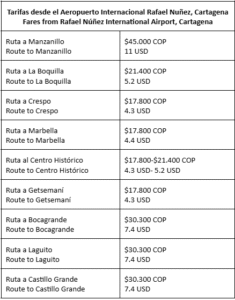
1. How much should a taxi from the airport to the most popular areas cost?
Whether you arrive by air or land, there will always be people at each of these services to guide you with fair rates. For example, when you leave the airport, they will give you a ticket with the rates to the most popular areas of Cartagena.
Make sure to confirm the fare before getting in so it matches; just ask: “Is it $18,000 colombian pesos to the historic center, is that okay?”
Here is an approximate list of fares for the busiest neighborhoods in 2025. Each neighborhood varies in distance, and prices may change, but not far from reality:
2. Can I drink tap water?
The water in Cartagena is potable, safe, and meets all the regulations required by the Ministry of Housing and Aguas de Cartagena. However, many people prefer to buy their own bottled water from supermarkets—either out of personal preference or because they have sensitive digestive systems. We always recommend asking at the reception of your accommodation whether or not they advise drinking the tap water.
3. Do I need an adapter to plug in my phone or laptop?
In Colombia, power outlets use type A and B plugs. If you’re coming from the United States, where these are commonly used, you won’t need an adapter. However, if you’re coming from Australia, Europe, or the United Kingdom, you will need an adapter to charge all your electronic devices, such as phones, batteries, laptops, and more.
4. Where should I exchange money?
This is definitely one of the most Cartagena FAQ´s. Here we tell you all the details so you can exchange your money safely and effectively. Click here.
5. Do they accept cards or is everything paid in cash?
Most commercial establishments accept credit or debit cards; however, many prefer cash due to bank commission fees. They usually display signs outside or inside the store indicating which cards they accept, so it’s a good idea to ask in advance.
For things like paying for bus rides, taxis, street vendors, and sometimes even day trips and accommodations on nearby islands, we recommend carrying some cash on hand—at least around 30 USD—to avoid any inconvenience.
6. Do I need vaccines to enter Colombia, especially Cartagena?
You don’t need any mandatory vaccines to enter Colombia, but the Yellow Fever vaccine is recommended due to an increase in cases. However, if you plan to visit high-risk areas like the Sierra Nevada National Park, Tayrona Park, or various Amazon rainforest reserves, you must be vaccinated at least 10 days in advance. Vaccination points are available at terminals and airports.
7. How should I dress for my upcoming vacation in Cartagena?
Cartagena’s tropical climate makes it essential to wear comfortable and lightweight clothing. We recommend light colors and breathable fabrics like cotton or linen, which help you stay cool, as the heat can sometimes be intense.
During the day, wear shorts and loose-fitting t-shirts in light shades like beige or white. At night, you can play with more vibrant colors while still keeping your outfit light and fresh.
The weather in Cartagena averages 27°C (80°F) with around 80% humidity, due to its proximity to the sea.
8. Is Cartagena a safe place?
Probably the most Cartagena FAQ´s. You’ll find several police officers patrolling the most touristy areas, such as the Historic Center, Getsemaní, Bocagrande, and El Laguito.
Always keep your belongings safe—carry a secure bag to avoid the common “cosquilleo” (pickpocketing).
Everything offered to you on the street has a cost—do not accept anything without asking the price and checking the quality.
Always remember to ask about prices beforehand for tours, taxis, street vendors, or anything else that could come with surprise charges.
Some tips:
- Don’t keep your wallet or phone in your back pockets.
- Avoid wearing flashy or expensive accessories in public.
- Always keep an eye on your belongings at bars, restaurants, beaches, and malls.
- Store your money in different places—some in the hotel, a small pocket in your backpack, or even inside hidden compartments in your luggage. But don’t keep all your money in one place (like your wallet), to avoid losing everything in case of theft.
9. What is the situation with prostitution in Cartagena?
Prostitution is a sensitive issue in Cartagena. You may see many women around the Clock Tower involved in it, and unfortunately, this often leads to sexual exploitation of vulnerable women, teenagers, and girls.
At La Carta, we are firmly against any form of exploitation of girls, boys, adolescents, women, and people in vulnerable situations. Do not support these practices.
Some campaigns by the city government and organizations aimed at preventing human trafficking include #CartagenaSinTrata – Breaking chains, protecting lives, which involved refugees and migrants, host communities, public officials, and civil society organizations.
10. What’s the situation with drug trafficking in Cartagena?
You might be thinking from the outside that Colombia is a country of drug traffickers, danger, violence, and drugs. Clearly, we carry a heavy history, and very violent times were experienced in the past. But that was decades ago—today, the situation is much more regulated, and it’s very unlikely you’ll encounter gang violence in tourist neighborhoods. We’re not in the ’90s anymore.
Yes, drug sales can still be seen—just like in many places around the world. You simply need to stay alert and avoid places or situations like the ones we’ll highlight in our guide: What NOT to do in Cartagena.
11. What are the emergency or tourist service numbers?
At La Carta, we have a section where you can find all the most important emergency and contact numbers for your stay in Cartagena. Click here.
12. Where are the departure points for the islands?

The two most popular piers for catching a boat—whether for accommodations or day trips—are:
- Muelle de la Bodeguita: Located right in front of the Clock Tower, this pier has an average boarding fee of 5 USD Boats start departing from 8:00 a.m.
- Muelle Turístico de Los Pegasos: Located along Cartagena’s Bahía de las Ánimas, near Getsemaní and Parque del Centenario. Excursions to the islands and aquatic activities depart daily from here.

13. What are the best hotels in Cartagena?

Here’s our guide to help you choose your next stay among the best hotels in Cartagena. [GUIDE]

14. Which beaches should I visit in Barú and the Rosario Islands?

You can’t miss an amazing day trip to some of the region’s most beautiful beaches. Here are our top recommendations for you from La Carta:
- The best beaches in Barú
- The best beaches in the Rosario Islands

15. What are the best hostels and Airbnbs in Cartagena?

We’ve carefully selected the top accommodations for you. Here are some amazing recommendations:
- The best hostels in Cartagena
- The best Airbnbs in Cartagena
If you have any other questions, don’t hesitate to contact us.
La Carta: Cartagena FAQ´s